
DEMOSCENE
Since home-computers -like the Commodore C64 and Amiga – arrived in kids´ rooms in the mid-80s, the so-called demoscene evolved. Since 1992 I´m part of this development, first in the cracker group Agnostic Front, then in the pretty well-known demoscene group Haujobb from 1994 till today.
What is the Demoscene?
The Demoscene is a living digital culture that unites technology, art, community, and competition.
Emerging in the 1980s from early home computer and cracker communities, where programmers began adding audiovisual signatures (“cracktros”) to demonstrate their skills, the Demoscene grew over the years into a diverse network of creators. These artists, musicians, designers, coders, organizers, and thinkers collaborate to produce real-time audiovisual works known as demos, along with music, graphics, text art, photography, videos, and interactive installations.
While some describe the Demoscene as a subculture because of its shared rituals, aesthetics, and social bonds, it is better understood as a scene-based cultural movement: open, transnational, and intergenerational. It thrives on the creative tension between collaboration and rivalry — a culture where experimentation, mastery, and playful competition inspire ever-new ways to express ideas through digital media.
Today, the Demoscene stands as a pioneering digital culture and creative movement, now recognized as part of our intangible cultural heritage — a unique synthesis of human creativity, artistic expression, community spirit, and technological ingenuity. Recognized by UNESCO in several European countries, it continues to show how collective passion, shared challenge, and community exchange can turn technological skill into cultural expression — and how this ongoing practice forms a translational culture* connecting art, technology, and people across generations.
If you are interested to learn more about the Demoscene, please click on the logo below.

Special Mission: Art of Coding
To ask the question why digital culture is not yet playing a role in UNESCO intangible cultural heritage, Andreas Lange and I initiated Art-of-Coding, an initiative to enlist the demoscene as the first digital culture on the list of UNESCO intangible world cultural heritage. With the help of many inside and outside of the scene, this initiative is groundbreaking in a few regards you can read more under the link below.
The initiative was already successful in Finland, Germany, Poland, Switzerland, Sweden, France and the Netherlands! In all these countries became the demoscene an official national UNESCO intangible cultural heritage! (Update 2025)
If you are interested or want to support the initiative:
Please find more information under:
http://demoscene-the-art-of-coding.net/
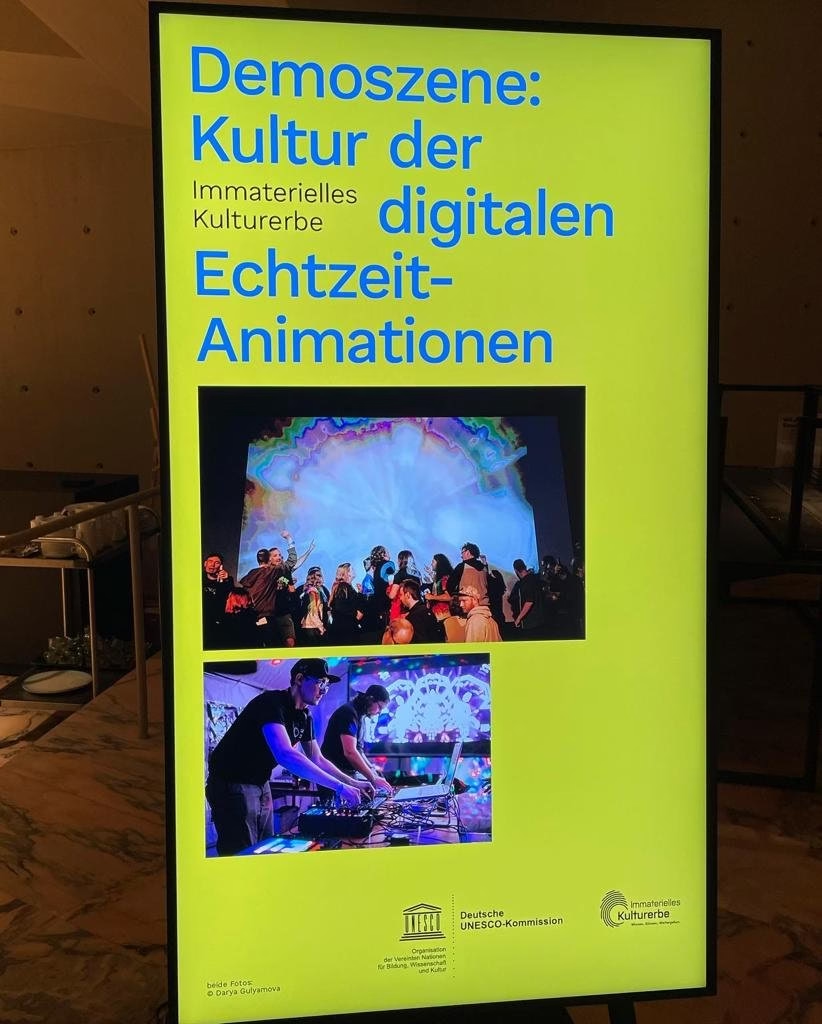
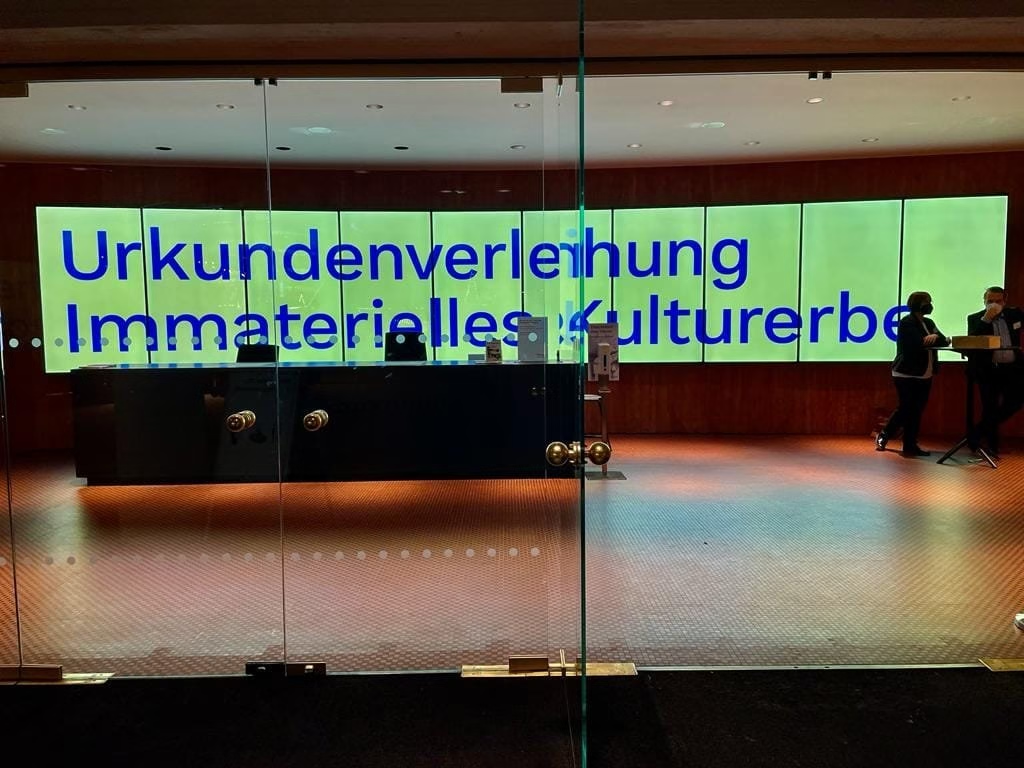
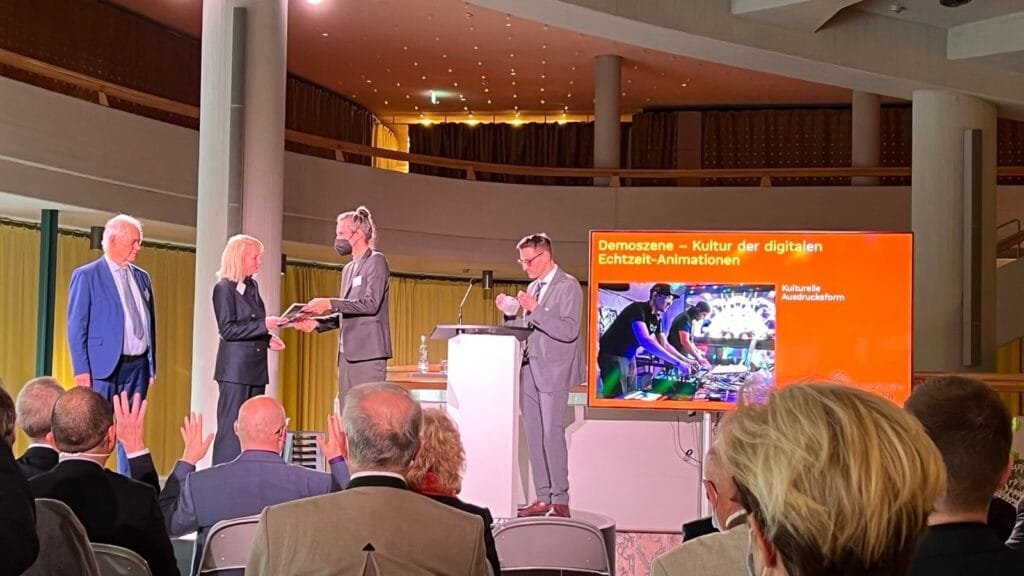
Digitale Kultur e.V.
To organize demoparties and promote the demoscene (What is the demoscene?) outside of its formerly secretive realms, we established the association Digitale Kultur e.V. in Cologne, Germany, in 2003.
Aside from organizing demoparties ourselves, the main aim of the association is to make the demoscene more visible to attract new talent and re-connect old sceners to the craft of realtime-demo-development – and being a touch-point for the interested public. The association has its focus on activities in Germany. Still, the mindset of any demoscener is always highly international, and thus we are happy to be involved in collaborations everywhere around the world.
Regular Activities
Our activities’ centerpiece is organizing the demoscene-party Evoke in Cologne, Germany.
Usually its happening close to gamescom middle of August.
Other activities include expositions, talks, demo-shows, and we also advise other events and organized tours to events with demoscene-affiliations.
If you are interested in talks, demo-shows, or have a budget to invite us for an exhibition, send a message to vorstand [at] digitale-kultur [dot] org or get in touch with me.
Demo-Videos
Don´t know the products of the demoscene yet? The demoscene is not only about demos, but also graphics, music, coding, Ansi/Ascii, and many more things, but the most easily consumable are without a doubt the demos themselves.
Here is a selection of fantastic demos as Youtube-Videos from 2015: